By Travis Bannert, Realtor and Mortgage Broker
A bare land condo is a home that looks like an ordinary freehold house — often a detached home on its own lot — but is legally part of a condominium. You own your lot and your home; the condominium corporation owns and manages the shared parts of the community, such as the private roads, visitor parking, and landscaped common areas. It is an Alberta ownership type that surprises many buyers, because nothing about the street tells you it is a condo until you read the title and the documents.
Bare land condo communities are common across the Edmonton area, including in newer subdivisions and adult-oriented villa developments. Here is how the ownership actually works, and what to check before you buy one.
What you own, and what the corporation owns
In a conventional condo, you own your unit and a share of everything else — the building, the roof, the hallways. In a bare land condominium, the "unit" on the plan is the lot itself. You own the land parcel and everything built on it: the house, the garage, your driveway, your yard. The corporation owns the common property — typically the internal roads if they are private, streetlights, common green space, ponds or amenities, and sometimes the exterior features the bylaws assign to it.
That split answers the question buyers ask first: yes, you own the house, and yes, you maintain it. Roof, furnace, siding, windows — in a bare land condo those are normally the owner's responsibility, much like a freehold home. What your condo fees buy is the upkeep of the shared infrastructure, not your building.
What the condo fees cover
Fees in a bare land community usually go toward:
- Maintenance and eventual repaving of private roads, plus snow clearing on them
- Common-area landscaping, fencing along common property, and entrance features
- Street lighting and signage
- Amenities the community offers, such as a clubhouse, lake, or walking-path system
- The corporation's insurance on the common property, management fees, and the reserve fund for long-term common-property repairs
Because the corporation is not maintaining your roof or exterior, bare land condo fees are often lower than in a conventional townhouse or apartment condo — but "lower" is not "none," and buyers who assumed there were no fees at all have been caught out. Always confirm the current fee, what it includes, and whether any special assessment is being discussed.
How it differs from freehold — and from a regular condo
Three differences matter in daily life:
1. Bylaws apply to your yard and exterior. Exterior paint colours, fences, sheds, decks, and sometimes even satellite dishes or holiday displays can be regulated by the corporation's bylaws. In a freehold home, most of that is your business (subject to city bylaws only).
2. There is a board and a reserve fund. The corporation must hold a reserve fund for its common property and produce financial documents. A well-run bare land corporation is an asset — someone else is repaving the road — but a poorly funded one can levy special assessments for road or pond work just like any condo.
3. Insurance is split. You insure your home and lot improvements as a homeowner would, while the corporation insures the common property. Your insurer and lawyer should both confirm the split for the specific plan, because getting it wrong leaves gaps.
Versus a conventional condo, the big practical difference is responsibility: the roof over your head is yours to replace, so a bare land purchase should be budgeted like a house, not like an apartment.
★★★★★ "He would get back to me with an answer to my questions in no time. Very professional and kind." — Google review
The documents to read before you offer
Buyers sometimes waive document review on bare land condos because "it's basically a house." Don't. Through your offer's condo document review, look at:
- The registered plan and bylaws — what you can and cannot do with your lot and exterior
- The current budget and reserve fund information — what the fees fund, and whether road or amenity work is coming
- Meeting minutes — the early-warning system for fee increases, special assessments, and community disputes
- Any age, rental, or pet restrictions — villa-style bare land communities sometimes carry 45+ or 55+ restrictions, which affect both who can live there and your resale buyer pool
- Insurance responsibilities — confirming which parts the corporation insures
Resale and financing notes
Bare land condos sell to a slightly narrower buyer pool than identical freehold homes, because some buyers filter out anything with condo fees or bylaws — and some search sites categorize them inconsistently, so good marketing has to work harder to put them in front of the right people. On the other side of the ledger, the managed-roads-and-amenities package is exactly what many downsizers are looking for, and in adult-oriented communities the demand from that buyer group is steady. Pricing should be set from sold bare land comparables in the same community, not from freehold sales down the street.
If a bare land home is on your list, create a free account to see new Edmonton listings the day they hit the market, save searches and get new-listing alerts: https://bridgerealtygroup.ca/ — I will walk the documents with you and show you what similar units in the community have actually sold for, so the fees and the price both make sense. Call me at 780-720-8240. And if you are still deciding between ownership types, the neighbourhood guides on this site show what each Edmonton area's housing stock actually looks like on the ground: https://bridgerealtygroup.ca/Communities — and if you are selling a home to make the move, start with what it is worth: https://bridgerealtygroup.ca/home-evaluation
Frequently asked questions
Do I own the land in a bare land condo?
Yes — your unit is the lot itself, and you own the lot and the home on it. The condominium corporation owns and maintains the common property, such as private roads and shared green space. Your title and the registered condominium plan spell out the exact boundaries.
Are bare land condo fees lower than regular condo fees?
Often, because the corporation usually does not maintain your home's exterior or roof — but it varies widely by community and by what the fees include. Some bare land communities with lakes, gates, or clubhouses carry substantial fees. Always check the current fee and budget rather than assuming.
Who pays if the roof needs replacing?
In most bare land condos, you do — the home is yours to maintain, like a freehold house. Confirm in the bylaws, because a small number of plans assign certain exterior items to the corporation, and that detail changes your budgeting.
Can a bare land condo corporation tell me what colour to paint my house?
It can, if the bylaws set architectural controls — many bare land communities regulate exterior colours, fences, and additions. Read the bylaws before you buy if you have plans for the exterior, a shed, or a deck.
Want me to walk you through it? Call 780-720-8240 or register on bridgerealtygroup.ca and I will call you.
By Travis Bannert, Realtor and Mortgage Broker — Travis Bannert, Realtor® | Bridge Realty Group, Maxwell Progressive Realty | 780-720-8240 | bridgerealtygroup.ca. Travis is also a licensed Mortgage Broker with Next Door Mortgages, BFL Dominion Lending Centres.
See Bridge Realty Group first on Google — add us as a Preferred Source: https://www.google.com/preferences/source?q=bridgerealtygroup.ca
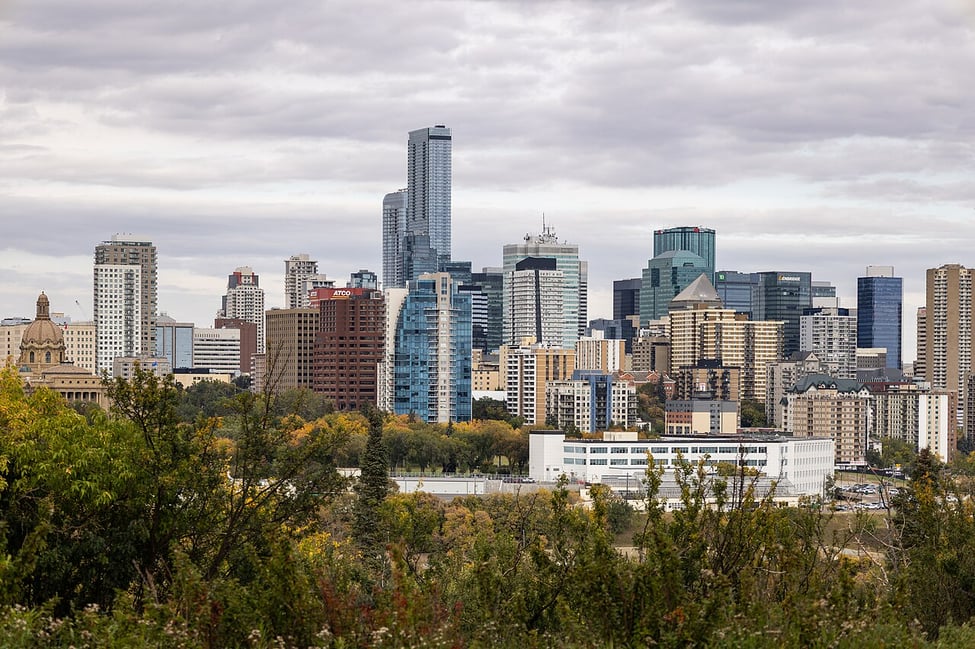
Edmonton skyline — Wikimedia Commons

