
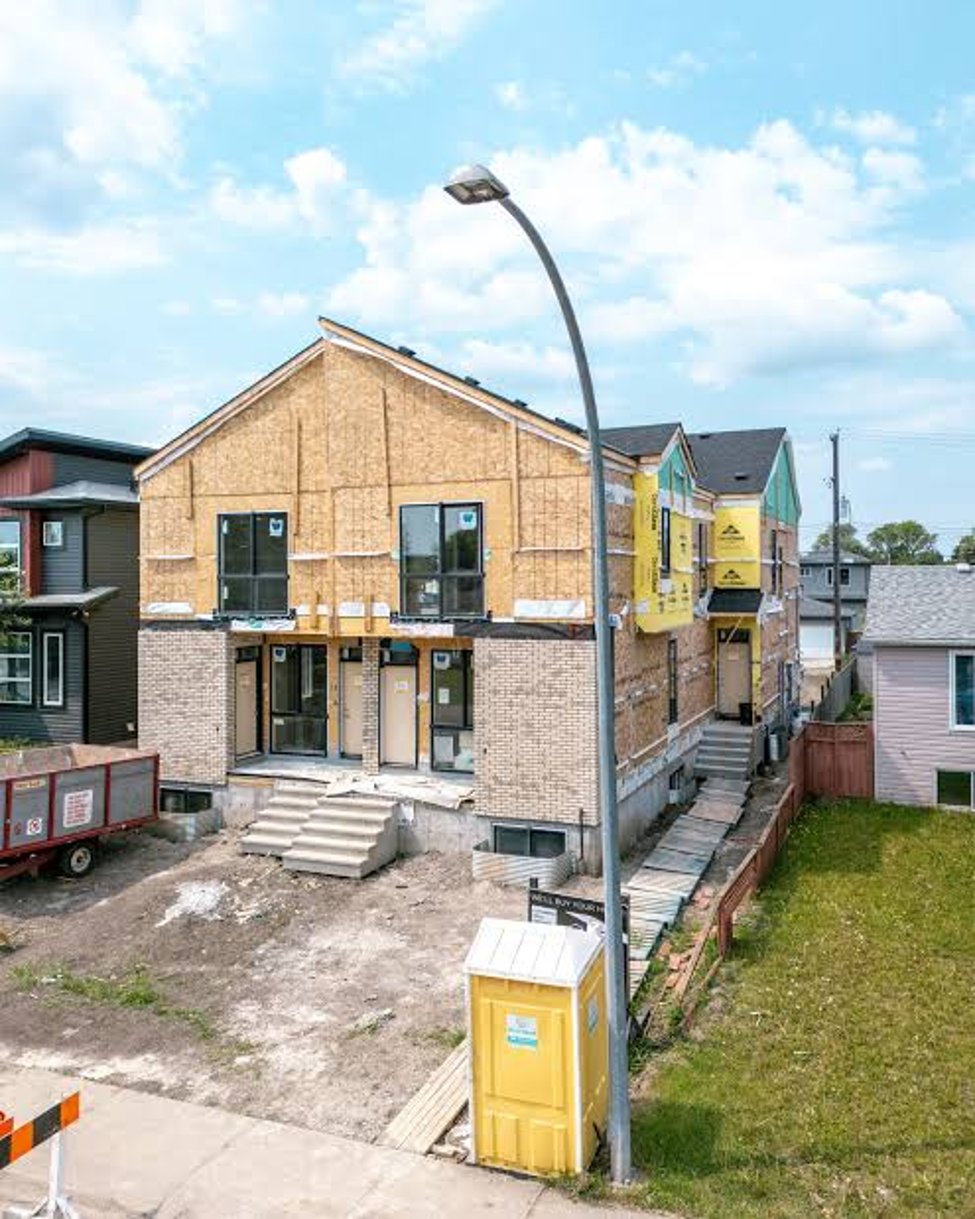
Edmonton's mature neighbourhoods are quietly producing almost a quarter of the city's new homes. CMHC's latest analysis of small-scale infill and housing supply in Canada found that small-scale infill — homes in buildings of two to eight units, plus accessory dwellings like garden suites — accounted for 23.28% of Edmonton's housing starts in 2025, up from 9.95% in 2023. That is the highest share of the three cities CMHC tracked closely: Vancouver came in at 18.07% and Toronto at 6.45%. Nationally, small-scale infill was roughly 1 in 10 starts.
The driver is no secret. Since January 1, 2024, Edmonton's Zoning Bylaw 20001 has allowed up to eight units on a typical residential lot in mature neighbourhoods — the duplexes, fourplexes and eightplexes now rising on streets that used to see one new house at a time.
CMHC's own caution is the part worth underlining: zoning opens the door, but financial viability gets homes built. The surge happened because, in more and more mature neighbourhoods, the math started to work.
The twist: the province has ordered a rollback
On October 8, 2026, the Alberta government ordered Edmonton to revert its small-scale residential rules — housing types, density and height — to the parameters in place before 2024, and to restore the minimum parking requirements the city removed before 2020. The written order followed on October 22. The city has until early January 2027 to pass the changes, and then 18 months to review its land-use rules while the rolled-back version stays in force. Projects already approved can continue as planned. (The city had already trimmed the maximum infill height to 9.5 metres in August 2026.)
In plain terms: the rules that produced the 23% are being rewritten, on a deadline, and the final lot-by-lot details land with the city's amendment.
What it means if you're buying
The approved pipeline is real, and it keeps building. If you want a new or newer home in an established neighbourhood — a half-duplex near the river valley, a fourplex unit close to downtown, a garden-suite property — the next couple of years bring the widest selection Edmonton has ever had in its mature areas, because everything approved under the current rules goes ahead.
Two things to check on any infill purchase: how the project was approved (and under which rules), and the real carrying costs — condo fees and special assessments on multi-unit conversions vary a lot. This is exactly the homework we do before an offer.
Start with what's actually for sale: browse Edmonton communities and listings, or call and tell us the neighbourhoods you're watching.
What it means if you're selling — especially on a mature-neighbourhood lot
If you own a home on a good-sized lot in a mature neighbourhood, a builder may value your property for what can be built on it, not just the house on it. That premium depends on the rules in force — and the rules are about to tighten. Under the current bylaw, a typical lot can host up to eight units; under a pre-2024 rollback, it may host far fewer, and the parking requirements alone change what fits.
That makes timing a real variable in what your property is worth. If you've wondered what your lot is worth to a builder versus a homeowner, get the number now, while the current rules still frame the offers: free home evaluation.
The bottom line
Edmonton led the country in small-scale infill in 2025 — and the policy that enabled it is being rolled back on a three-month clock. Buyers get a deep approved pipeline to shop from; sellers on mature-neighbourhood lots have a window worth pricing before it closes. Either way, this is a moment where a short conversation beats guessing.
Call or text 780-720-8240 — and as a licensed mortgage broker as well as a Realtor®, I can plan the financing side of the move in the same conversation.
Travis Bannert, Realtor® | Bridge Realty Group, Maxwell Progressive Realty
780-720-8240 | bridgerealtygroup.ca

