

The difference between a condo townhouse and a freehold townhouse in Edmonton is who owns and maintains the land and shared areas: with a condo townhouse you own your unit and pay monthly condominium fees to a corporation that handles exterior and common property, while with a freehold townhouse you own the home and its lot outright, pay no condo fees, and carry all maintenance yourself. The monthly cost and rule differences matter as much as the purchase price.
What do you actually own in each type?
In a condo townhouse, your title is to the unit as defined in the condominium plan, plus a share of the common property. The corporation insures and maintains exteriors, roofs, and shared areas according to its bylaws, and major shared repairs are funded through fees and the reserve fund.
In a freehold townhouse, your title covers the building and the lot it sits on, similar to a detached home that shares walls with neighbours. There may still be a homeowners association in some developments with a modest fee for specific shared amenities, which is different from a condominium corporation — always confirm which structure applies before you write an offer.
How do monthly costs compare?
A condo townhouse bundles costs into one predictable monthly fee, but that fee is on top of your mortgage, property taxes, and utilities, and it can increase. Lenders and insurers look at the fee as part of your carrying costs, so a lower purchase price with a high fee is not automatically cheaper month to month.
A freehold townhouse has no condo fee, but the roof, exterior, driveway, and yard are your expenses when they come due. Compare the two by adding realistic maintenance savings to the freehold side. If you are selling first, a free home evaluation helps you net out what you will actually carry into the purchase.
What rules should you check before buying?
For a condo townhouse, read the bylaws, reserve fund study, recent meeting minutes, and financial statements during your document review period. Check rules on pets, rentals, parking, renovations, and age restrictions, and look for upcoming special levies or large planned projects that fees may not fully cover.
For a freehold townhouse, check zoning, party-wall agreements if any, easements, and whether exterior changes need association or municipal approval. In both cases, a home inspection still matters — shared walls do not protect you from an aging furnace or a leaking window in your own unit.
"As a first-time home buyer… I had Travis as my realtor who expertly guided me every step of the way." — Charity Oisamoje, Google review
Which townhouse type suits which buyer?
Choose a condo townhouse if you want exterior maintenance handled for you and predictable shared costs, and the bylaws fit your life. Choose freehold if you want more control, no condo fees, and you are comfortable funding your own repairs and dealing directly with neighbours on shared walls and fences.
Either way, do not compare sticker prices alone. My Downsizing and Seniors Guide includes the fee-and-maintenance comparison many townhouse buyers — especially downsizers moving from detached homes — use to make this exact decision.
What is your next step on an Edmonton townhouse?
Shortlist by total monthly cost, read the documents before you fall in love with the kitchen, and price in the next five years of maintenance either way.
Comparing two townhouses and not sure which is the better buy? Call me at 780-720-8240 and I will help you compare the fees, documents, and resale picture side by side — and, as a mortgage broker too, what each option does to your approval.
By Travis Bannert, Realtor and Mortgage Broker
Travis Bannert, Realtor® | Bridge Realty Group, Maxwell Progressive Realty | 780-720-8240 | bridgerealtygroup.ca
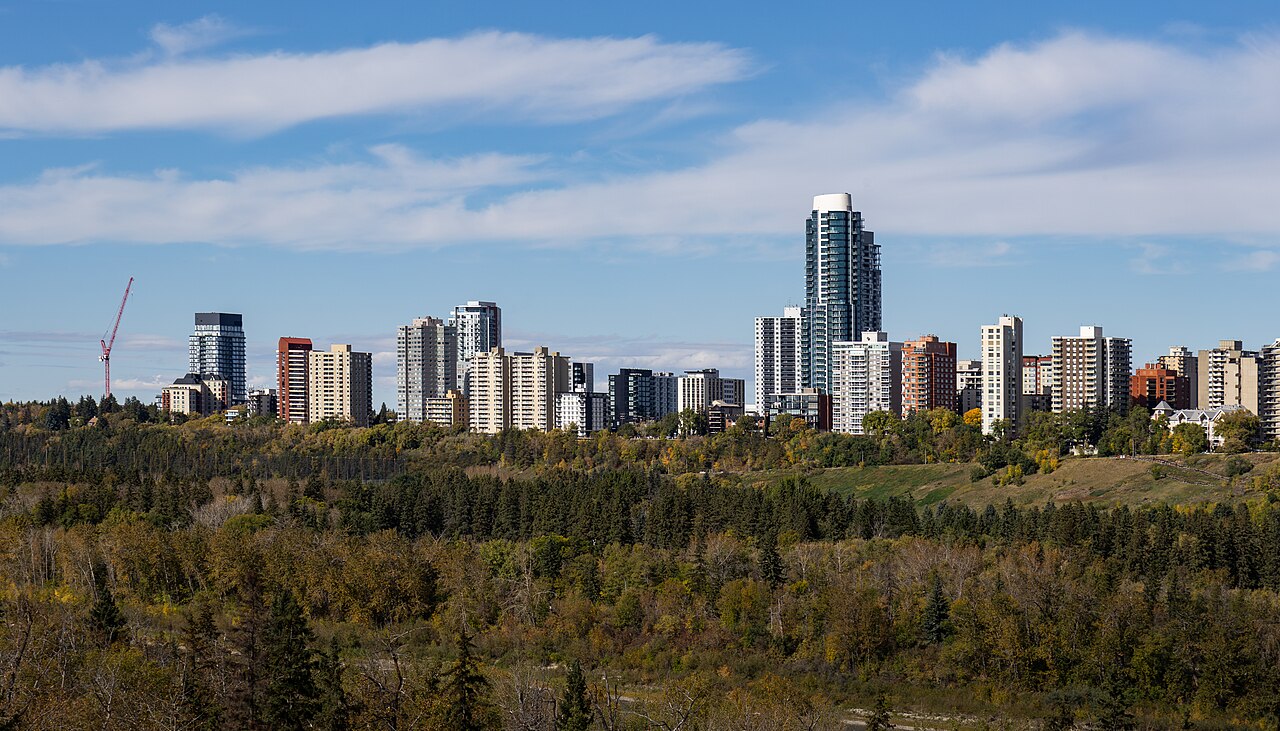
Photo: via Wikimedia Commons — downtown Edmonton.
Credit: via Wikimedia Commons