
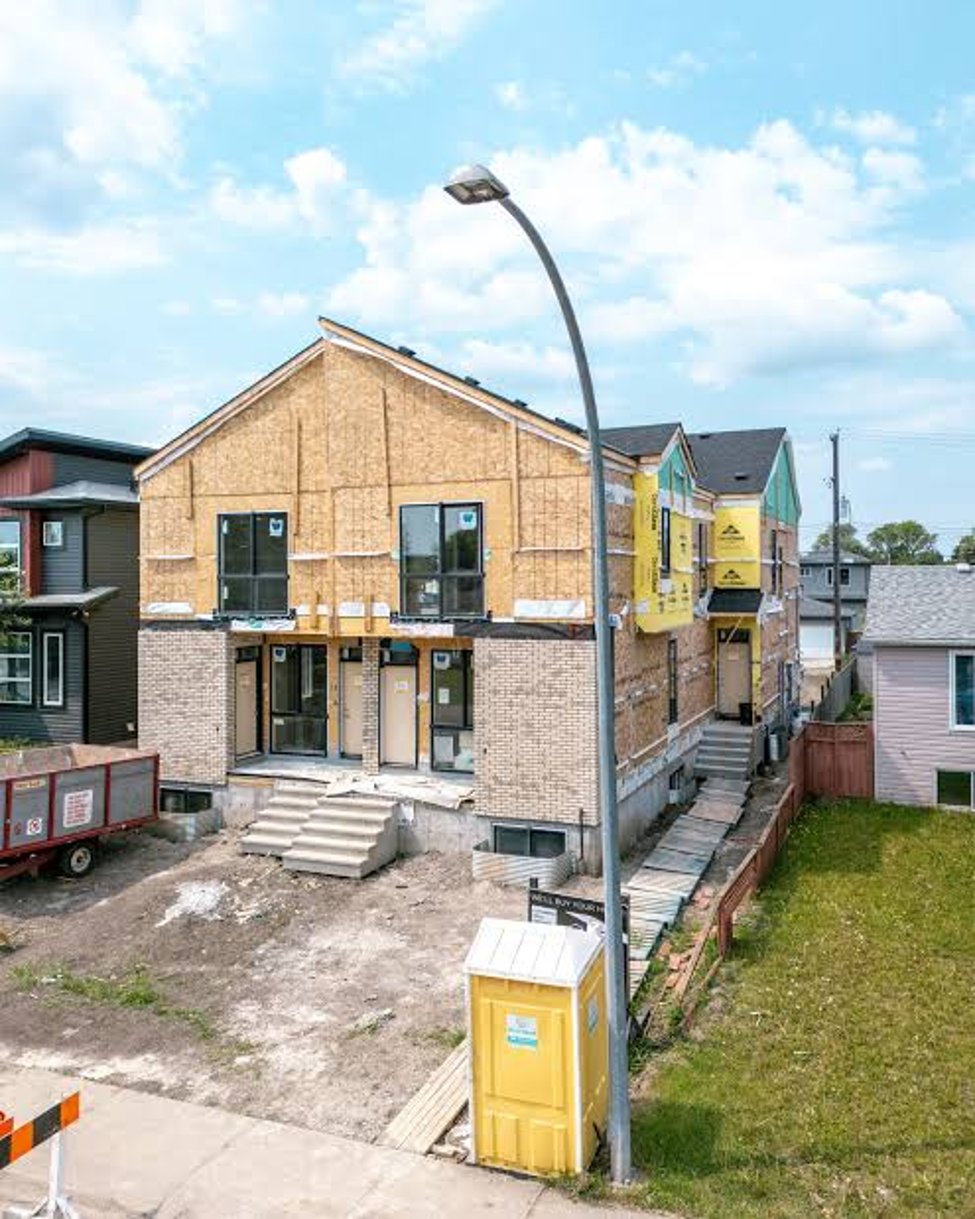
A good home inspection is a visual, non-invasive check of the systems an inspector can reach on the day — it is not an X-ray of the house. The misses are rarely carelessness: they are the places an inspector physically cannot see without opening walls, digging, or running a camera, plus the systems that only misbehave under conditions that don't exist during a two-to-three-hour visit. Knowing which blind spots matter in an Edmonton home — and which specialist closes each one — is how a buyer uses the inspection condition properly instead of treating a clean report as a guarantee.
Edmonton buyers have room to do this follow-up right now. The REALTORS® Association of Edmonton reported 1,882 sales and 7,533 active listings across the Greater Edmonton Area in October 2026 — a balanced market, where condition periods are long enough to book a specialist instead of waiving the questions.
The blind spots that come up most in Edmonton homes
The attic, in winter especially. An inspector checks the attic from the hatch when access and safety allow, but deep insulation hides the ceiling below it, and a mid-winter visit can mean the roof and attic tell only part of their story. Ice-damming history, bathroom-fan venting that dumps moist air into the attic instead of outside, and mould on the underside of the roof sheathing are easy to under-read from a hatch. Follow-up: ask directly what the inspector could and could not see, and if the home has a history of ice dams or ceiling stains, budget for a roofer's look in spring rather than assuming the winter report settled it.
The sewer line. A standard inspection runs the taps and watches drains — it does not put a camera in the line to the street. In Edmonton's mature neighbourhoods, older clay or cast lines can be cracked, offset, or full of tree roots while every drain in the house still runs acceptably on inspection day. Follow-up: on an older home, a sewer scope is the single most common extra worth ordering during the condition period. It is a separate service with its own fee — get the quote before you waive conditions, not after possession.
In-floor heat, buried lines, and anything inside a wall. Inspectors do not open walls, lift floors, or excavate. A boiler can fire during the visit while a loop of in-floor heat is air-locked or leaking slowly; knob-and-tube or aluminum wiring can hide behind newer visible work; a slow plumbing leak can be staining a ceiling cavity nobody can see. Follow-up: where the report says "not visible" or "could not be verified," treat that sentence as the to-do list. An electrician, a heating contractor, or a plumber can each confirm in one visit what a general inspection has to leave open.
Systems that only fail under load or in another season. A furnace inspected in July and an air conditioner inspected in January have not really been tested. A sump pump that has never run, a grading problem that only shows up in spring melt, and a basement that leaks only in a heavy rain all pass a dry-day visit. Follow-up: ask the seller — through your Realtor — about seasonal history, and read the inspection report for the items the inspector flagged as season-limited. If you are buying in winter, a spring re-check of grading, downspouts, and the basement is cheap insurance, and worth writing into your first-year maintenance list at possession.
The condo building outside the unit doors. In a condo, the inspection covers the unit; the building's roof, parkade, elevators, and reserve fund live in the condominium documents, not in the inspection. A thorough unit inspection can still leave the biggest costs unexamined. Follow-up: the document review is the follow-up — read the reserve fund study and board minutes with the same care as the inspection report, because on a condo the two together are the real inspection.
How to run the follow-up inside your condition period
- Read the report for its limits first. Before the findings, find the scope language: what was not accessible, not operating, or not visible. Our guide to reading a home inspection report without panicking walks through that triage — safety items, water items, maintenance items, cosmetic noise.
- Match each open question to one specialist. Sewer scope for the line, roofer for the roof and attic questions, electrician for wiring and panel capacity, heating contractor for boilers and in-floor heat. One call each, booked the day the report lands — condition periods are short, and specialists book up.
- Decide what changes the deal and what just changes the budget. A failed sewer line is a negotiation item. A furnace that is old but working is a budgeting item. Knowing the difference before waiver day is what keeps a condition period calm — the full scope of what an inspection does and does not promise is laid out in What Does a Home Inspection Cover in Edmonton?
- Keep the paper. The report, the scope video, and the specialists' quotes become your maintenance file and, one day, part of the disclosure picture when you sell. Buyers who keep them answer their own buyers' questions faster.
The short version
An inspection that finds nothing is not proof there is nothing to find — it is proof that what could be seen, on that day, looked sound. The buyers who get the full value of an inspection are the ones who read its blind spots as a checklist and close them with the right specialists while they still have conditions to work with.
Frequently asked questions
Does a home inspection in Edmonton include a sewer camera scope?
No. A standard home inspection is a visual, non-invasive check — taps are run and drains are watched, but a camera scope of the sewer line is a separate service with its own fee, booked during your condition period.
Can a home inspector open walls or floors to check hidden systems?
No. Inspectors do not open walls, lift floors or excavate, so wiring, plumbing or in-floor heat hidden behind finished surfaces can only be confirmed by a licensed specialist.
What should I do when an inspection report says 'not visible' or 'could not be verified'?
Treat that sentence as your follow-up list. Book the matching specialist — roofer, electrician, plumber, heating contractor or sewer-scope provider — while your inspection condition is still in place.
Does a condo inspection cover the building's roof, parkade and reserve fund?
No. A condo inspection covers the unit. The building's roof, parkade, elevators and reserve fund are covered in the condominium documents, which should be reviewed with the same care as the inspection report.
If you are shopping for an Edmonton home and want an inspection plan built into the offer — not bolted on after — start with a search of current Edmonton listings, create a free account to save searches and get new-listing alerts, and call me at 780-720-8240. Tell me a good time and I will call you this week, and we will talk through the home, the inspection, and the follow-ups before you write the offer.
By Travis Bannert, Realtor and Mortgage Broker
Travis Bannert, Realtor® | Bridge Realty Group, Maxwell Progressive Realty, 780-720-8240, bridgerealtygroup.ca
"We had an excellent experience working with Travis as both our realtor and mortgage broker… professional, knowledgeable, patient." — Sheri Tian, Google review
See Bridge Realty Group first on Google — add us as a Preferred Source: https://www.google.com/preferences/source?q=bridgerealtygroup.ca